Buying your first home in Savannah can feel exciting one minute and overwhelming the next. You are not just choosing a house. You are also choosing a commute, a daily routine, a maintenance style, and a budget that needs to work long after closing day. This guide will help you understand how Savannah neighborhoods compare, what tradeoffs matter most, and how to narrow your search with more confidence. Let’s dive in.
Start with Savannah tradeoffs
Savannah is not one uniform market. It makes more sense to think of it as a group of areas with different strengths, price points, and day-to-day patterns.
For first-time buyers, that matters because the right fit is often less about the most talked-about neighborhood name and more about how you want to live. You may care most about walkability, parking, commute time, home style, or room to grow. Savannah gives you options, but each option comes with tradeoffs.
The City of Savannah’s neighborhood tool can help you get organized early. You can search by address and compare neighborhood associations, aldermanic districts, and nearby features like parks, bikeways, community centers, grocery stores, libraries, CAT bus stops, and schools.
Compare city and suburban options
A wider search area can change your budget picture fast. Savannah’s 2024 median owner-occupied home value is $248,900, according to U.S. Census Bureau QuickFacts.
Nearby comparison markets look different. Pooler comes in at $322,400, Richmond Hill at $313,400, Port Wentworth at $228,100, and Garden City at $169,400. Those numbers do not tell you what any one home will cost, but they do show how much your options can shift when you look beyond one ZIP code.
Here is a quick snapshot of how some nearby areas compare.
| Area | Median owner-occupied value | Mean commute |
|---|---|---|
| Savannah | $248,900 | 20.7 minutes |
| Pooler | $322,400 | 24.1 minutes |
| Richmond Hill | $313,400 | 29.8 minutes |
| Port Wentworth | $228,100 | 26.6 minutes |
| Garden City | $169,400 | 19.1 minutes |
Pooler, Richmond Hill, and Port Wentworth have all grown notably since the 2020 Census. That helps explain why many first-time buyers compare Savannah neighborhoods with suburban alternatives instead of limiting the search to city limits.
Understand Savannah’s main area types
Downtown and historic districts
Downtown Savannah is the city’s most pedestrian-oriented area. The city highlights how easy it is to get around on foot and also points residents to the fare-free downtown transit system and the Savannah Belles Ferry.
If you are drawn to older homes and urban character, this part of Savannah may stand out right away. Local historic districts include the Downtown Historic District, Victorian Historic Overlay District, Streetcar Historic Overlay District, and Cuyler-Brownville.
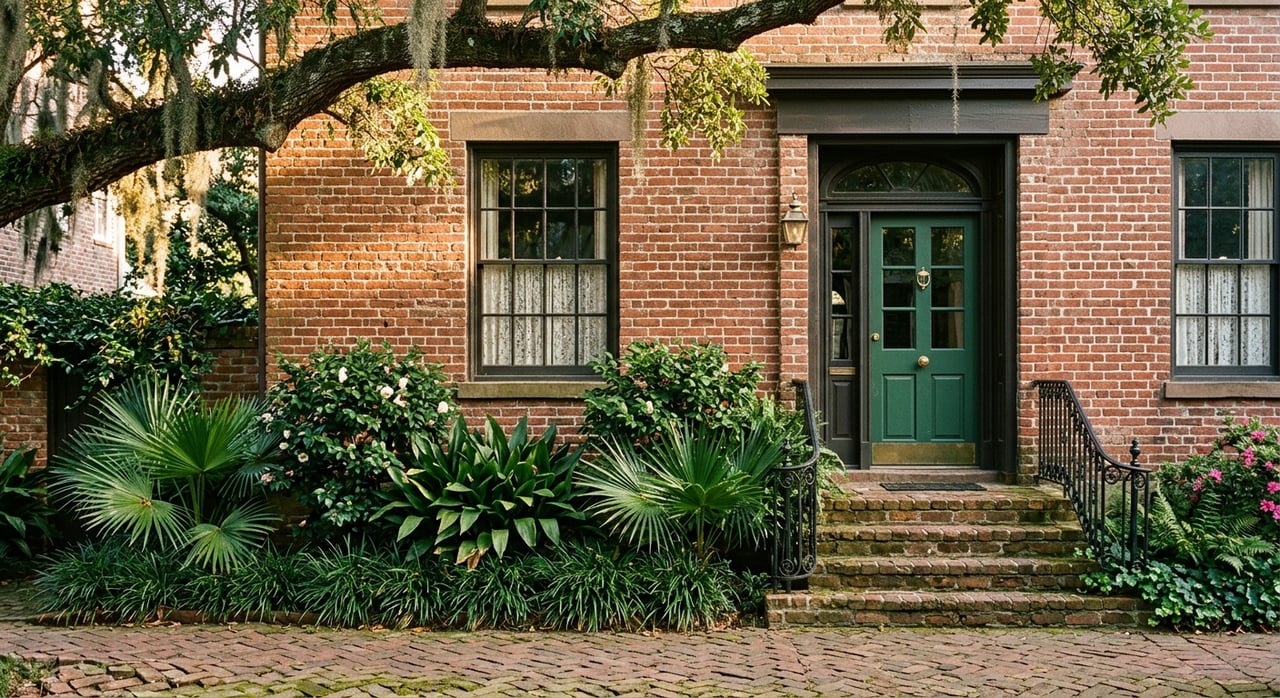
Homes here often come with distinctive architecture and a different ownership experience. Savannah’s historic-preservation materials describe wood-frame and siding houses, Savannah grey brick, stucco on brick, tall homes close to the sidewalk, formal front stairs, and many town houses. That often means parking, lot shape, upkeep, and long-term maintenance deserve as much attention as price.
Midtown and in-town areas
Midtown often feels like a middle ground for first-time buyers. You are still in town, but usually with a little more breathing room than downtown.
This part of the city can appeal to buyers who want city access without a full downtown lifestyle. The city’s Complete Streets work in areas like Paradise Park and Hudson Hill/West Savannah also shows that some older in-town neighborhoods continue to see pedestrian and traffic-calming improvements.
Southside
Southside tends to be a more car-oriented comparison within Savannah. City planning materials contrast downtown’s dense grid with Southside’s more spread-out roads, shopping, and parking pattern.
For you, that usually means Southside is worth evaluating based on drive time, parking, corridor access, and newer housing patterns. If walkability is lower on your list and convenience by car matters more, Southside may deserve a closer look.
Nearby suburban comparisons
If you want more space, newer construction, or a different daily rhythm, nearby communities often enter the conversation. Pooler, Richmond Hill, Port Wentworth, and Garden City each offer a different mix of price point, access, and commute pattern.
This does not make them better or worse than Savannah. It simply means your first-home search may work best when you compare the full Savannah-area picture instead of focusing on one area too early.
Match the home style to your lifestyle
One of the biggest first-time buyer mistakes is falling in love with a home style before thinking about the lifestyle that comes with it. In Savannah, that can be especially important.
Historic-district homes can be a great fit if you love older architecture and understand the tradeoff. The city says new construction and most renovations in local historic districts are reviewed for design compatibility and visual standards.
That means a future project may involve more process than you expected. If you hope to replace windows, change the exterior, build an addition, or make other visible updates later, you will want to understand those review requirements before you buy.
The farther you move toward Southside or nearby suburban markets, the more likely your choice may feel like a practical commute-and-garage decision rather than a preservation decision. For many first-time buyers, that simplicity is a major plus.
Look beyond the front door
A neighborhood should work for your everyday life, not just for showing day. That is why transit, biking options, and access to basics matter more than many buyers expect.
CAT serves Savannah, unincorporated Chatham County, and parts of Garden City. Its system includes fixed-route buses, the downtown dot shuttle, and the Savannah Belles Ferry. CAT lists the local bus fare at $1.50, while the dot shuttle and ferry are free.
Savannah also continues to expand mobility options. The city says Tide to Town will be a protected trail network of more than 30 miles connecting 62 neighborhoods, 30 schools, 3 hospitals, and several economic centers.
If you care about walking, biking, or reducing car dependence, use the city’s neighborhood tool to check bikeways, CAT stops, grocery stores, parks, and libraries. That kind of map review can tell you a lot about how a neighborhood will feel on a regular Tuesday, not just on a weekend tour.
Budget for the full cost picture
Price is only part of affordability. A neighborhood that looks cheaper at first glance may come with different commute costs, maintenance needs, insurance costs, or HOA fees.
That is why it helps to compare monthly life, not just list price. A historic home close in may save time on commuting but ask more from you in upkeep. A suburban option may offer more space, but a longer drive could become part of your daily cost in both time and money.
For first-time buyers, the smartest move is usually to define your comfort zone before you tour homes. Think about what payment feels sustainable, what kind of maintenance you can realistically handle, and how much flexibility you want for future goals.
Make flood risk part of your search
In Savannah, flood-zone review is a normal buying step. It is not something to treat as a rare exception.
The City of Savannah says many acres in Chatham County are floodplains and directs residents to local flood resources. FEMA identifies its Flood Map Service Center as the official online source for flood-hazard maps.
This does not mean every home carries the same risk. It does mean you should compare properties with flood exposure in mind and ask questions early. For a first-time buyer, that can help you avoid surprises later when you are evaluating insurance, monthly costs, and long-term comfort with the property.
Think about your long-term plans
Your first home does not need to be your forever home. Still, it should support where you think life may go in the next few years.
If you may want to renovate later, a historic-district home can involve more review and compatibility standards. If you are considering future short-term rental use, Savannah’s STVR overlay includes the Downtown, Victorian, and Streetcar local historic districts.
If your goal is simply to put down roots and stay for a long time, focus on the basics first. Commute time, maintenance tolerance, flood exposure, and day-to-day fit often matter more than which area feels the trendiest right now.
A simple way to narrow your search
If you feel stuck between too many options, simplify your process. Start by ranking your top priorities instead of trying to solve everything at once.
You can use this quick checklist:
- Set a realistic monthly payment range
- Decide how important walkability is to you
- Compare commute times across your top areas
- Think about your comfort with older-home maintenance
- Review flood-zone information early
- Check access to groceries, parks, transit, and daily essentials
- Consider whether future renovation plans matter to you
- Compare Savannah with nearby markets like Pooler, Richmond Hill, Port Wentworth, and Garden City
That kind of clarity can save you time and stress. It also makes it easier to spot the neighborhoods that truly fit your life.
Buying your first home in Savannah is a big step, but it does not have to feel chaotic. When you understand the tradeoffs between downtown, midtown, Southside, and nearby communities, you can make a more confident choice that fits your budget, routine, and long-term goals. If you want calm, local guidance as you sort through your options, connect with Devin Pickett for a straightforward conversation about your next move.
FAQs
What should first-time buyers compare between Savannah and nearby suburbs?
- Compare price points, commute times, home styles, parking, maintenance expectations, and how you want daily life to feel. Savannah, Pooler, Richmond Hill, Port Wentworth, and Garden City all offer different tradeoffs.
What makes downtown Savannah different for first-time buyers?
- Downtown Savannah is more pedestrian-oriented and includes local historic districts, which can affect walkability, parking, home style, and future exterior renovation plans.
What should first-time buyers know about historic districts in Savannah?
- In Savannah’s local historic districts, new construction and most renovations are reviewed for design compatibility and visual standards, so future exterior changes may involve extra steps.
How important is flood-zone research when buying in Savannah?
- It is very important. The City of Savannah says many acres in Chatham County are floodplains, so flood-zone review should be part of your normal home search process.
Does Savannah have public transit for daily use?
- Yes. CAT serves Savannah, unincorporated Chatham County, and parts of Garden City with fixed-route buses, the downtown dot shuttle, and the Savannah Belles Ferry. CAT lists local bus fare at $1.50, while the dot shuttle and ferry are free.
How can first-time buyers narrow down Savannah neighborhoods?
- Start with your budget, preferred commute, desired home style, and comfort with maintenance. Then use Savannah’s neighborhood tool to compare amenities like parks, grocery stores, libraries, bikeways, and CAT stops.